Liminal Order: My process for creating a hack to master Order in my own style.
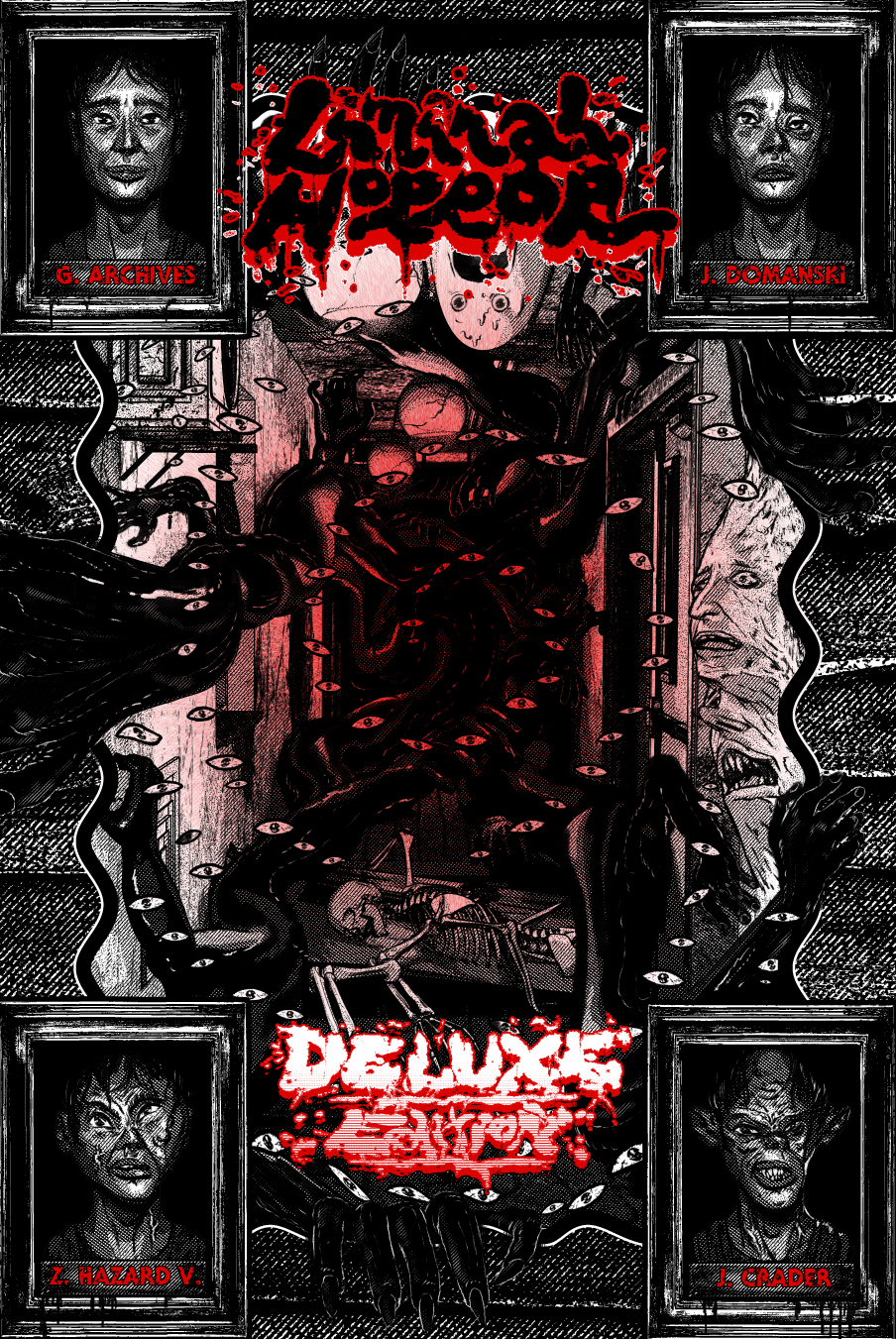
I really like Liminal Horror; it's a relatively generic NSR (New School Revolution, similar to OSR but without repeating the old system, instead taking the gameplay style and applying it to a newer RPG style) horror system based on Cairn, another NSR system about forest exploration. This origin makes supplements created for one system fit relatively easily into the other.
Thinking about this compatibility, I made a hack to run the world of Ordem Paranormal. I'm not a fan of almost anything related to Ordem, be it the system or the setting, but I have friends who are big fans and ask me to run Ordem a lot because I'm an "experienced storyteller." So, because of my soft heart, I tried to think of something that would allow me to run Ordem without it being a suffering for me. Because I must say that after years of running the fifth edition of D&D because it had a lot of players but it being awful for me, I can no longer run something that isn't fun for me too.
So I took Liminal Horror and combined it with a really cool supplement/system for Cairn called Block, Dodge, Parry (BDP) to add a more "tactical" combat aspect to entertain players who enjoy the Order combat aspect. The first time was quite clunky because I only played the two together without changes, and this generated some strange interactions, mainly because BDP was made for medieval fantasy combat where you have 4 goblins with different weapons, and simply importing that directly into a horror RPG will create a thematic conflict (and themes are represented by your rules, so i started making some changes.
The one I liked making the most wasn't even for the hack itself, but for the Order setting when I was a GM, which was that monsters don't have elements until you assign one, because if fear is incomprehensible but you have 4 very well-defined categories of fear, it's not incomprehensible. So I made it so that the monsters don't have elements, even though they exist in the system (Blood became violence, death became decay, knowledge became erudition, and energy became disorder, but that's a special case). However, we humans use categories as a weapon against fear. By explaining the monsters with elements, we somehow "stabilize" their form into something we can understand and, most importantly, defeat.
The rule is based on the Time, Skill, and Tools rule from BDP, and I named it "Trail, Sightings, and Origin," and it works like this:
During the investigation, the characters can try to assign an affinity to the Creature. It's a personal interpretation by the investigators, but it needs to be based on the reality of the situation to avoid uncertainty.
Trails are the most common type of clue to be found first. They can be anything the creature leaves behind in its path; common examples are victims and marks.
"The victim's body being completely mangled shows an animalistic aspect to the attack, linking the creature to the element of violence." "The place where the creature was found was worn down as if ages had passed; I believe it is a creature linked to ruin." "The creature's victims are all organized methodically, almost as if it were a ritual; I fear we are dealing with something linked to the element of erudition."
Sightings are a trail that can only occur when the creature appears; its appearance, abilities, or behavior are all valid clues.
"That creature moved in a way I can only describe as a meat grinder with legs; if that's not linked to violence, I don't know what is." "The icy touch of that ghost felt like it was going to rip my soul from my body, I'd say ruin for sure." "Guys, do I need to say that it's erudite? It literally had a mouth on its belly speaking Latin."
Origin tends to be the last thing discovered; it's how the creature came to this world and whether it can be summoned by human hands or is a purely supernatural creation.
"The creature arose from the fear of the ancient legend of the butcher of the red pier; I believe this is linked to violence." "This curse affects everyone in this family because long ago, when they were nobles, they let their people suffer from the plague while they celebrated; this is the family's ruin." "The one who summoned this creature needed it because it's a piece for a larger ritual; clearly, it's a matter of erudition."
The interpretation should come from the investigators, but the arbitration of whether it's valid comes from the narrator. If they have 0 or only one clue, it's not possible to define an element.
With 2 clues, it's possible, but the shadow of uncertainty still haunts the case. Let whoever said the element flip a coin; if the face is the previously chosen one, the creature is linked to the element; otherwise, uncertainty wins.
With 3 clues, no test or anything of the sort is necessary to define the element.
But what happens if the investigators don't get any clues or fail the test in case of uncertainty? Chaos takes over, the "wild card" element, which many investigators use as a lifeline in case of failure, is far more complex than other elements.
Defining the elements helps determine how to get rid of the creature. Violence is overcome by removing its ability to continue (either by sealing the creature or even killing everyone on its victim list). Ruin is overcome by linking it to its origin (either by reversing what created it or something directly related, like using the bones of the one who summoned it). Erudition is overcome by getting rid of the knowledge linked to fear (rendering the knowledge useless or erasing it paranormally or physically, like putting a bullet on everyone who knows). Chaos is more complicated because it requires the intervention of another element, whether through artifacts, other creatures etc.
There are more changes in the hack, such as adding Mausritter's inventory and changes to the fallouts, but for now everything is in the testing phase and may be removed depending on feedback, so I believe that's a topic for later discussion. If you want to comment about this post, you can do it here